Article:
Energy retailing: From bill shock to bill control - can retailers turn customers into energy market participants?
For years, the retail energy debate has been dominated by affordability. But in 2026, that framing is no longer enough. The more pressing question is whether retailers can help customers do more than endure higher bills — whether they can give households and businesses real tools to respond.
That means shifting the conversation from price pain to practical control: better data, better tariffs, better automation, and a market design that rewards flexibility rather than passivity.
The future retail model is one where technology, pricing and product design do the hard work in the background, allowing customers to capture value from their solar, batteries, EVs and flexible demand with minimal friction.
How do retailers move customers from passive bill payers to active participants?
The first step, these experts agree, is trust.
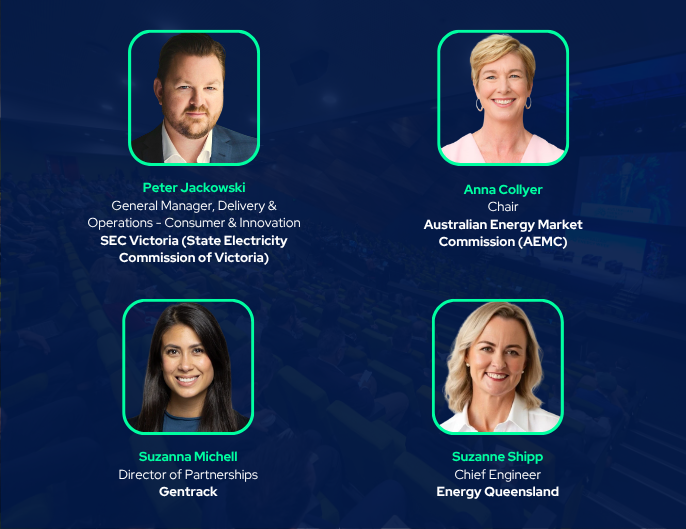
According to Peter Jackowski, General Manager, Delivery and Operations — Consumer and Innovation at the State Electricity Commission (SEC) Victoria, retailers have an immense opportunity to turn customers into active participants, but only, if they offer “greater levels of simplicity and transparency to build consumer trust”.
In practice, that means tailored incentives and demand-response programs that reward customers for engaging, rather than asking them to decipher an increasingly technical market on their own.
For Anna Collyer, Chair, Australian Energy Market Commission (AEMC), consumer protections are necessary but insufficient. The AEMC’s recent reforms, including limiting price increases to once a year and ensuring hardship customers are automatically placed on their cheapest offer, reduce harm. But, as Collyer puts it, “protection is not participation.” Retailers need to use smart meter data more proactively, presenting customers with personalised savings opportunities in ways they will actually notice and understand.
Suzanna Michell, Director of Partnerships, Gentrack warns retailers to stop behaving like commodity vendors and transition to “energy advisors”. For Gentrack, a software provider for the utilities, that begins with hyper-personalised information, not just a total bill amount but a clearer picture of when and how energy is being used, paired with targeted incentives to shift consumption.
Suzanne Shipp, Chief Engineer, Energy Queensland places the opportunity in the broader transformation already underway across the grid. Queensland’s high penetration of rooftop solar and growing uptake of household batteries are already reshaping system operations. That opens the door to new partnerships between customers, retailers and networks. “Trust between customers, networks and retailers is critical,” Shipp says, particularly if retailers want to help customers monetise their assets through flexibility services that reduce pressure on the network.
Which technologies and pricing models will matter most?
Across all four interviews, one point came through strongly: smart meters are essential, but they are only the starting point.
“Smart meters are the non-negotiable digital foundation, without them none of the more sophisticated tools are possible, which is why the AEMC’s accelerated rollout to universal deployment by 2030 matters so much,” says Collyer.
But data alone does not create control. The real gains come when interval data is combined with automation, flexible pricing and devices that can respond on the customer’s behalf.
“The biggest impact will come from technologies that remove effort for customers, not add complexity,” Shipp adds. The real shift comes when smart meters are paired with controlled hot water, smart EV charging, home energy management systems and demand response that optimises usage in the background.
Michell is equally direct about where the real disruption lies: “The real gamechanger is the move toward Automated Demand Response (ADR) combined with dynamic wholesale pricing,” she says. She points to tariffs such as “Solar Soak” rates and to platforms that can automatically charge EVs or home batteries when renewable generation is abundant and prices are low, then export when prices spike.
Jackowski emphasises virtual power plants. “VPPs with demand response capabilities are key enablers,” he says. By connecting home solar and batteries into aggregated programs, customers can “trade or sell excess energy back to the grid during peak times, turning them from passive consumers into active market participants.
What is stopping wider participation?
Despite the momentum, the barriers remain substantial.
Jackowski highlights a basic technical problem: interoperability. Many devices still do not communicate well across brands or platforms, creating a fragmented and frustrating experience for consumers. That complexity, he says, is a direct barrier to uptake.
Michell sees a similar problem inside the industry itself.
“Many Australian retailers are still tethered to legacy, monolithic IT systems, built for a one-way grid,” she says.
Those systems were not designed for high-frequency, bidirectional data flows, VPP participation or flexible trading. At the consumer end, she warns of a persistent “complexity tax”: if a tariff or demand response offer is too hard to understand, customers simply will not opt in.
“The barriers are layered, regulatory, behavioural and technological,” Collyer says, and they reinforce one another. Rules designed for a centralised generation system are still being adapted for distributed energy resources. At the same time, high upfront costs for solar, batteries and EVs continue to exclude many renters and apartment residents, raising equity concerns.
Shipp’s perspective is grounded in decades of demand management experience in Queensland. The programs that survive, she says, are rarely the most elegant. “The ones that survive are simple, are set and forget and don’t require active participation.” That is a critical lesson for retailers: if participation depends on constant customer attention, it is unlikely to scale.
What does a customer-centric retail model look like in five years?
On this, there was striking alignment. The most likely destination is not a more active customer in the traditional sense, but a more valuable and better-served one.
Jackowski says the model is heading toward energy-as-a-service, built around “simplicity, automation, and maximising value from customer-owned assets.” Michell sees a similar future, where “the commodity of a kilowatt-hour becomes secondary” and customers instead buy outcomes — a comfortable home, a charged EV, lower bills — delivered through intelligent orchestration behind the scenes."
Collyer says a genuinely customer-centric system would be one “where the energy system works around the customer’s life, not the other way around.”
In that world, VPPs and flexible tariffs are standard, hardship protections are automatic, and retailers compete on helping customers reduce their total “energy wallet” — electricity, gas and transport combined — rather than simply selling more power.
Shipp extends that vision to the distribution system itself. In five years, she says, networks and retailers should be coordinating more closely, using real-time data and dynamically managed operating envelopes to integrate consumer energy resources as part of normal system management.
Customers, in turn, would automatically share in the value their assets create.
That is the real challenge now confronting the sector. Retailers cannot solve cost-of-living pressure through rhetoric alone. But if they can translate data, tariffs and automation into products that are trusted, intuitive and genuinely useful, they may finally turn bill shock into bill control.
Join the conversation with Anna Collyer, Suzanne Shipp, Suzanna Michell, Peter Jackowski and a host of other energy retailing experts at Australian Energy Week.
Download brochure