Ambition is intact - but turning transition plans into built infrastructure is getting harder
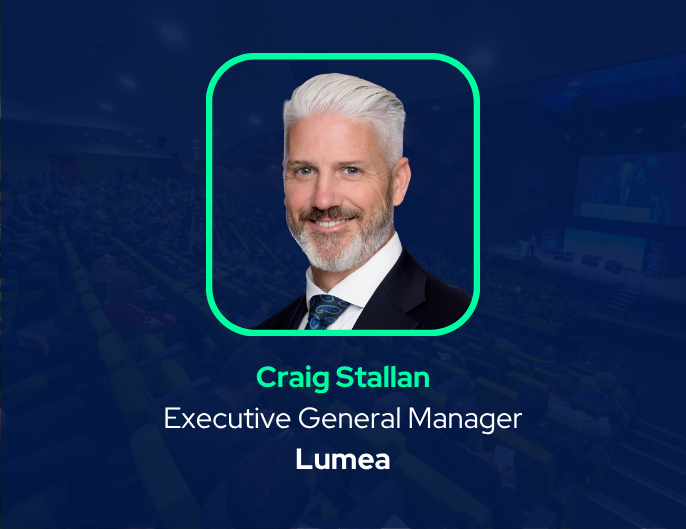
An interview with Craig Stallan, Lumea
What is driving Lumea’s approach to the transition?
Lumea’s role in the transition is about connecting infrastructure with speed and certainty. Whether that is renewable generation, battery energy storage, data centres or emerging industries, our focus is enabling the infrastructure Australia needs to support a reliable, secure and prosperous energy future.
We are committed to having 30GW connected by 2030, which will significantly contribute to Australia’s net zero targets.
Customers are making investment decisions now and they need confidence infrastructure can be delivered in time to support growth. Our role is to help unlock renewable generation capacity, support large-load connections and navigate increasingly complex connection and planning environments.
We are already delivering at scale, with 18GW connected or under construction across renewable generation and major energy infrastructure projects.

“Digital infrastructure is becoming an increasingly important part of Australia’s economic future and energy landscape”
Importantly, we also see the transition extending beyond electricity generation. Digital infrastructure, particularly hyperscale data centres, is becoming an increasingly important part of Australia’s economic future and energy landscape. Supporting those customers to connect efficiently, responsibly and at scale is a growing priority for us.
How do you see the reality of 2030 targets aligning with current delivery pathways?
There remains strong industry support for Australia’s 2030 targets, but the reality is the pathway to achieving them is becoming more complex.
The scale of infrastructure required across transmission, renewable generation and storage is enormous. At the same time, projects are navigating workforce shortages, supply chain constraints, approvals complexity and growing community expectations.
“We are well and truly in the deep transition now”
We are well and truly in the deep transition now. The challenge is no longer whether the transition will happen, it is about speed, co-ordination and certainty for the community, energy consumers and our customers.
What gives us confidence is that momentum is building across the system. Renewable Energy Zones, large-scale storage projects and major transmission investments are creating a flywheel effect, where each new piece of infrastructure unlocks additional generation, investment and customer demand.
Battery energy storage is also becoming increasingly critical. Australia has made strong progress on shorter-duration storage, however medium-duration storage remains an important challenge to solve.
At the same time, new forms of demand such as data centres are reshaping how we think about the grid. Connection enquiries for large-load customers now exceed 10GW, compared to average system demand of around 8GW. If managed strategically, these large-load customers can support the grid during low demand periods while improving utilisation of shared infrastructure, helping to lower average network costs for consumers.
How might the transition create different outcomes for regions, technologies and customer classes?
The transition will not affect all regions, technologies or customer groups equally. For regional Australia, the transition presents significant economic opportunities through investment, jobs and long-term infrastructure development.
Renewable Energy Zones are already reshaping parts of the country, bringing new industries and economic activity into regional communities. Increasingly, these projects can also deliver broader social and economic benefits. Lumea’s HumeLink mobile and internet boosters are helping improve connectivity in regional areas by amplifying existing mobile and internet signals along transmission corridors, delivering more reliable communications infrastructure.
Different technologies will also create different infrastructure requirements. Renewable generation, batteries, hydrogen, green steel and data centres all have unique connection and operational needs, which means planning and network design must become increasingly flexible and customer led.
“We have a huge opportunity to export our megawatts as megabytes”
Data centres represent a major opportunity for Australia. They can support economic growth, technology investment and digital capability, while also helping Australia position itself as a regional services hub for the Asia-Pacific market. We are currently building the infrastructure to connect the first data centre to the transmission network. I’ve said it once, and I’ll say it again – we have a huge opportunity to export our megawatts as megabytes.
What are some common misconceptions about the transition, and how do they compare with reality?
One common misconception is that the transition is being driven solely by the push toward renewables.
The reality is that Australia is also managing the retirement of ageing coal-fired generation, while electricity demand continues to grow. That means the challenge is not simply replacing one source of generation with another. We need to bring significant volumes of new generation, storage and transmission online simultaneously to maintain reliability and affordability.
Bringing more generation and storage online is critical for all Australians especially when we continue to experience macro energy shocks like the oil crisis from the war in the Middle East.
“Infrastructure is the enabler”
Another misconception is that transmission and infrastructure are the barriers to the transition but in reality, infrastructure is the enabler. The challenge is ensuring planning, approvals, supply chains and community engagement all move at pace and in a well co-ordinated way, with community and industry doing it together.
What about the transition keeps you up at night?
One of the biggest challenges facing the transition is maintaining community trust and social licence as infrastructure development accelerates – especially across regional Australia.
We are seeing increasing resistance and delays around some wind developments, which is creating real delivery challenges for the transition. Wind will remain a critical part of Australia’s future renewable energy mix and if projects continue to stall it creates flow-on impacts for reliability, generation replacement and overall transition timelines.
“Social licence cannot be treated as a box-ticking exercise”
Communities want to understand how projects will impact them, what benefits they will see locally and whether development is being undertaken responsibly. Social licence cannot be treated as a box-ticking exercise.
We have seen firsthand through projects like the Snowy 2.0 Transmission Connection that early engagement and genuine community investment matter. Lumea has supported local initiatives in communities such as Tumbarumba because leaving a positive long-term legacy in regional areas is non-negotiable.
Craig was appointed the Executive General Manager of Lumea (Transgrid Group) in 2024 and is responsible for delivering essential infrastructure that delivers on Australia’s clean energy targets.
Download brochure